About > 

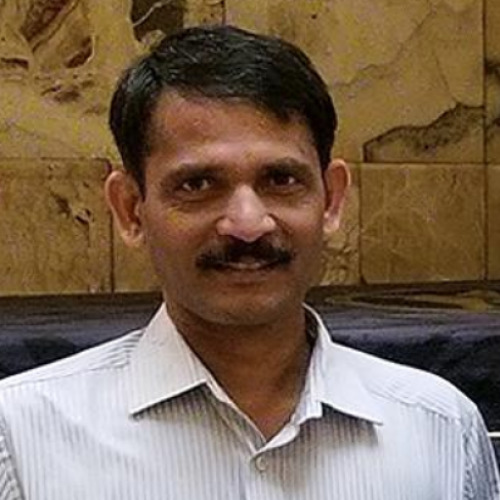
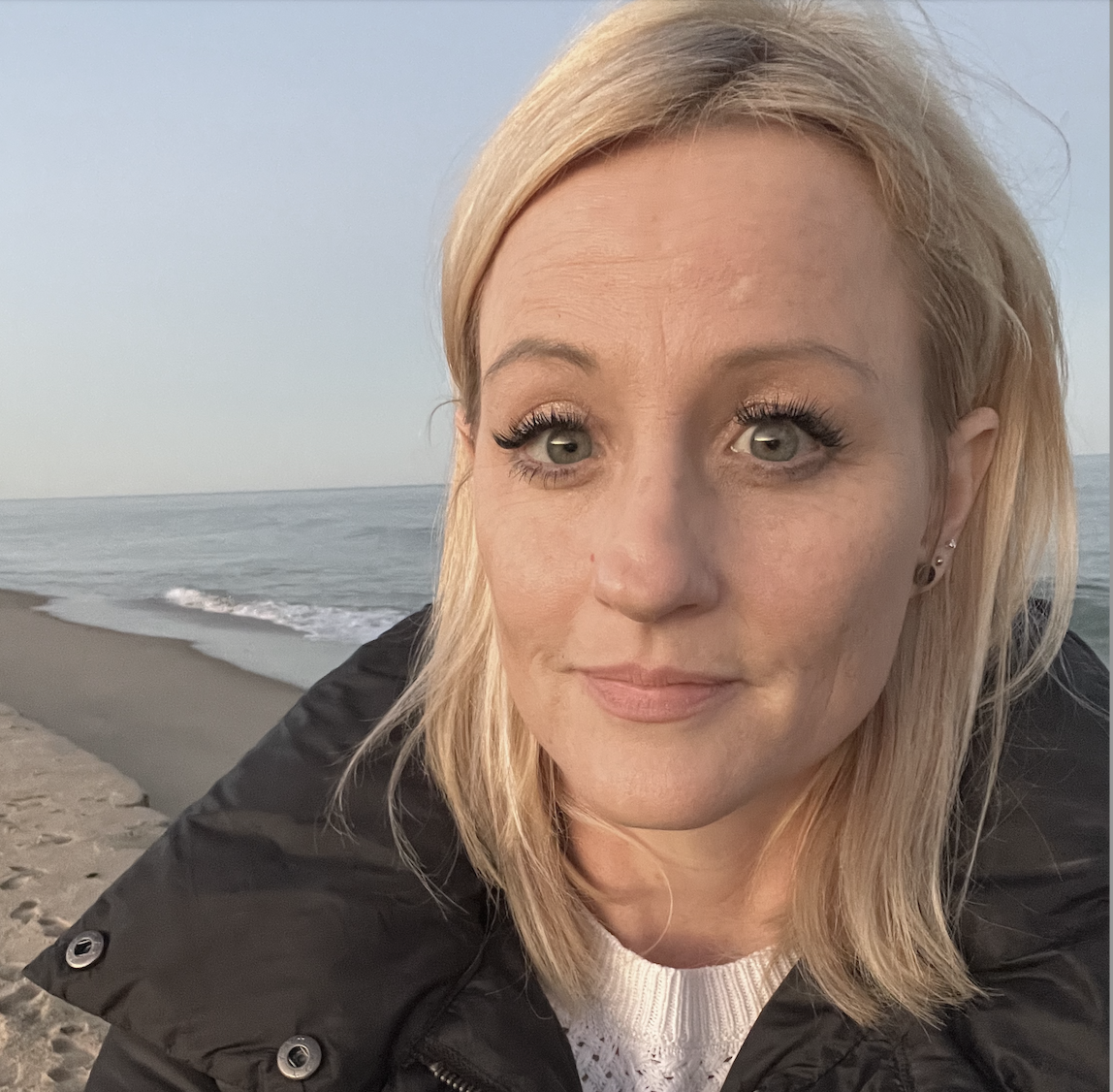
Omar Ishteiwy

Senior Reservoir and Completions Engineer- Conventionals

Omar Ishteiwy is a Senior Reservoir and Completions Engineer at ResFrac, where he leads the development and application of modeling workflows for conventional reservoirs and supports business development for conventional applications. He has two decades of experience in fracturing and stimulation across conventional, transitional, and unconventional reservoirs, both onshore and offshore.

Prior to joining ResFrac, he held engineering and technical leadership roles at Schlumberger and bp. His experience spans exploration, appraisal, and development programs across the Middle East, North Africa, and the North Sea, including tight-gas and gas-condensate developments and complex offshore stimulation campaigns. His technical background includes proppant and acid fracturing, matrix stimulation, multistage completions, diagnostic injection testing, fracture modeling, and production optimization.

He has been responsible for stimulation programs from completion evaluation and treatment design through execution and performance assessment. His work has included establishing stimulation bases of design, defining technical scopes and service requirements, and building engineering capability across multidisciplinary teams. These responsibilities have required detailed technical knowledge alongside practical judgment about operational constraints, cost, and reservoir development objectives.

He holds a Bachelor of Science in Chemical Engineering from the University of Colorado Boulder and a Master of Science in Chemical Engineering from Colorado School of Mines in Golden, Colorado. He has authored and co-authored technical papers on fracture design, diagnostics, completion systems, and stimulation performance.

Based in Colorado, he enjoys hiking, camping, and traveling, often combining the three to explore new places.

Omar's posts

Automatic Report Generation in ResFracPro

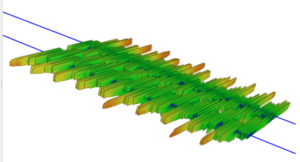
This month’s release has a feature that I am particularly excited about – automatic report generation. The reports are generated automatically when a simulation finishes. Also, reports can be generated on-demand for simulations that have already been completed. The reports are highly customizable, allowing the user to generate different line plots, 3D visualizations, preview plots, and tabular data. The user can provide a template PPT, so that the report is made with their preferred PPT style.
Read more

Introducing ResFrac’s New Multisector Capability

This month’s ResFrac release has a ton of new capabilities. The most important is called ‘multisector’ – the ability to split different sections of the well across different computers. This capability provides a computationally efficient and practical way to run larger models and handle complex scenarios. Hats off to Danial Zeinabady and Michael Nole, who have been the main developers on this project. Beyond them, it’s been a big team effort, pulling in folks from cloud, simulator, and user-success. First, let’s review – what is sector modeling? Why do we need a ‘multi’ version of it?

Read more
Abstract illustration with multiple outlined maps over a green-to-yellow gradient and light beams.

The influence of well configuration on water loss in Enhanced Geothermal Systems

Recently, ‘water loss’ has been a hot topic of discussion for EGS. Fervo reported that they have been producing only 70% of the fluid volumes that they have been injecting at their Project Red. The FORGE project reported a roughly 10% water loss rate. Because projects will have finite water rights, these results have led to concern that growth of EGS will be limited by excessive water consumption. This is a valid concern, and water availability is a legitimate factor in site-selection and project engineering. However, I believe that the problem has been overstated.


Read more

Meet the ResFrac team

Learn why both independents and supermajors trust ResFrac

Search