About > 

Chris Hewson

Senior Simulation Engineer

Chris Hewson is a Reservoir Simulation Engineer with ResFrac responsible for programming the reservoir simulator of ResFrac.

Prior to joining ResFrac, Chris was a Reservoir Simulation Engineer at Cenovus Energy, where he worked on an internal reservoir simulation software for modeling thermal oil recovery, a history matching and optimization software, and shifting the software to cloud use. Prior to Cenovus, Chris worked for The Netherlands Organisation for Applied Scientific Research working on reservoir simulation studies and software for NOCs, Majors and Independent oil companies across the Middle East and Europe. During his internship, Chris worked at Equinor in Norway as a Reservoir Engineer evaluating offshore heavy oil completion techniques.

Chris obtained a Bachelor of Science degree in Chemical Engineering from the University of Calgary and a Master of Science degree in Petroleum Engineering from Delft University of Technology.

Chris is passionate about backcountry skiing, mountain biking, and golf (he formerly worked as a golf pro). He’s married to a wonderful Wisconsinite who, despite his best efforts, refuses to switch to the metric system. They have an energetic 3-year-old son who loves trucks, cars, and basically anything that moves.

Click here for a list of Chris’ publications.

Chris's posts

Automatic Report Generation in ResFracPro

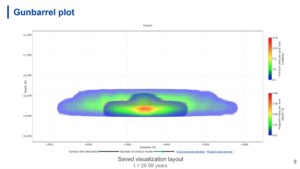
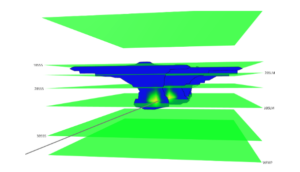
This month’s release has a feature that I am particularly excited about – automatic report generation. The reports are generated automatically when a simulation finishes. Also, reports can be generated on-demand for simulations that have already been completed. The reports are highly customizable, allowing the user to generate different line plots, 3D visualizations, preview plots, and tabular data. The user can provide a template PPT, so that the report is made with their preferred PPT style.

Read more

Introducing ResFrac’s New Multisector Capability

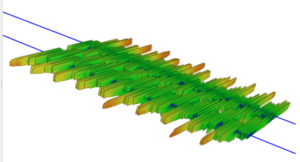
This month’s ResFrac release has a ton of new capabilities. The most important is called ‘multisector’ – the ability to split different sections of the well across different computers. This capability provides a computationally efficient and practical way to run larger models and handle complex scenarios. Hats off to Danial Zeinabady and Michael Nole, who have been the main developers on this project. Beyond them, it’s been a big team effort, pulling in folks from cloud, simulator, and user-success. First, let’s review – what is sector modeling? Why do we need a ‘multi’ version of it?

Read more

Meet the ResFrac team

Learn why both independents and supermajors trust ResFrac

Search