

About

Sama Morsy

Reservoir and Completions Technical Team Lead

Sama Morsy is a Senior Reservoir and Completions Engineer, as well as a Reservoir and Completions Technical Team Lead at ResFrac, where she provides value to the energy industry by optimizing the development of fracturing and reservoir projects. She provides a unique combination of simulation and field trial experience from a variety of roles in research, asset development, and operations.

Sama worked at Chevron for over 6 years as a reservoir and petroleum engineer, leading and completing performance improvement projects in the Permian Basin. Prior to chevron, Sama worked as instructor at Cairo University for five years teaching undergraduate petroleum engineering courses.

She earned a PhD from Texas Tech University in 2014 focusing on improving shale assets production by proposing different enhanced and improved oil recovery methods. Sama has a master’s degree from Cairo University in 2007 specialized in shaly sand petrophysics analysis, and in 2009 she took a second master’s degree from the University of Wyoming on waterflooding surveillance analysis. She attended Cairo University where she completed her bachelor’s degree in petroleum engineering in 2004.

She resides in Houston, Texas with her husband and son. She is passionate about cooking and writing. Sama received several awards along her career including the prestigious Fulbright award in 2011 and exceptional achievement awards during her career at Chevron.

Sama published more than 25 peer review and SPE papers and filed for four pending patents to optimize shale well development. Her professional publications include:

  • SPE 200775 paper, 2021, Unconventional Optimized Development Strategy Workflow
  • SPE-195331-MS, 2019, Identification of the Decline in Well Productivity Index due to Wellbore Damage through the Removal of Fluid and Formation Effects
  • SPE-175012-PA, 2018, Determination of In-Situ Reservoir Absolute Permeability Under Multiphase-Flow Conditions Using Transient Well Testing
  • International Journal of Petroleum Engineering, 2016, Effects of salinity and alkaline concentration on the spontaneous imbibition behavior and rock properties of some shale rocks
  • Journal of Unconventional Oil and Gas Resources, 2015, Effect of low-concentration HCl on the mineralogy, physical and mechanical properties, and recovery factors of some shales
  • Advances in Petroleum Exploration and Development, 2014, Effect of Water Salinity on Shale Reservoir Productivity
  • 169141-MS, 2014, Enhancing Well Stimulation with Improved Salt Tolerant Surfactant for Bakken Formation
  • SPE-169034-MS, 2014, Imbibition Characteristics of Marcellus Shale Formation
  • SPE-168984-MS, 2014, Imbibition Characteristics of the Barnett Shale Formation
  • SPE-168985-MS, 2014, Improvement of Eagle Ford Shale Formations Water Imbibition by Mineral Dissolution and Wettability Alteration
  • Journal of Petroleum & Environmental Biotechnology,2014, Matrix acidizing characteristics in shale formations
  • SPE-168180-MS, 2014, Optimizing Surfactant Additives for Enhanced Well Stimulation in Bakken Formation
  • SPE-169519-MS, 2014, Surfactant Preflood to Improve Waterflooding Performance in Shale Formations
  • SPE-167568-MS, 2013, Impact of Matrix Acidizing on Shale Formations
  • SPE-165450-MS, 2013, Potential of Combining Propane (LPG) Hydraulic Fracturing and Chemical Flooding in Thin Heavy Oil Reservoirs
  • SPE-166403-MS, 2013, Potential of Improved Waterflooding in Acid-Hydraulically- Fractured Shale Formations
  • SPE-167056-MS, 2013, Waterflooding in the Eagle Ford ShaleFormation: Experimental and Simulation Study

Sama's posts

Abstract illustration with multiple outlined maps over a green-to-yellow gradient and light beams.

The influence of well configuration on water loss in Enhanced Geothermal Systems

Recently, ‘water loss’ has been a hot topic of discussion for EGS. Fervo reported that they have been producing only 70% of the fluid volumes that they have been injecting at their Project Red. The FORGE project reported a roughly 10% water loss rate. Because projects will have finite water rights, these results have led to concern that growth of EGS will be limited by excessive water consumption. This is a valid concern, and water availability is a legitimate factor in site-selection and project engineering. However, I believe that the problem has been overstated.
Read more
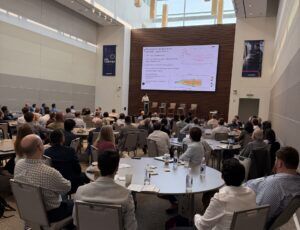
Large conference room with a speaker presenting a slide deck to an audience seated around circular tables.

2026 ResFrac Annual Symposium Recap

On June 25, 2026, we got the ResFrac community together both in-person at the ExxonMobil campus in Spring, Texas, and virtually around the globe for our Annual Symposium. With our community growing as fast as it is, the energy in the room was absolutely buzzing. We had a jam-packed day of operator case studies, deep-dive technical sessions, and some incredible geomechanical insights from industry legends.

Read more
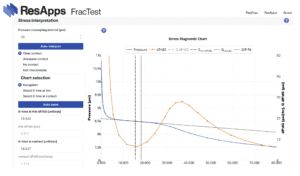
ResApps FracTest interface showing a Stress interpretation section with an Auto-interpret button and contact options, next to a Stress Diagnostic Chart.

FracTest – An Online Tool for DFIT Interpretation

This week, we are releasing FracTest, a web-based application for interpretation of diagnostic fracture injection tests (DFITs). FracTest is available at resapps.resfrac.com, alongside our other two ResApps, StageOpt and IntTest. DFITs are small-volume fracture injection tests used to estimate stress, pore pressure, and permeability. These quantities form the foundation of the fracture and reservoir engineering work that we do in ResFrac, and so we view DFIT interpretation as one of the most important parts of our workflow.

Read more

Meet the ResFrac team

Learn why both independents and supermajors trust ResFrac

Search