
About

Michael Nole

Senior Reservoir Simulation Engineer

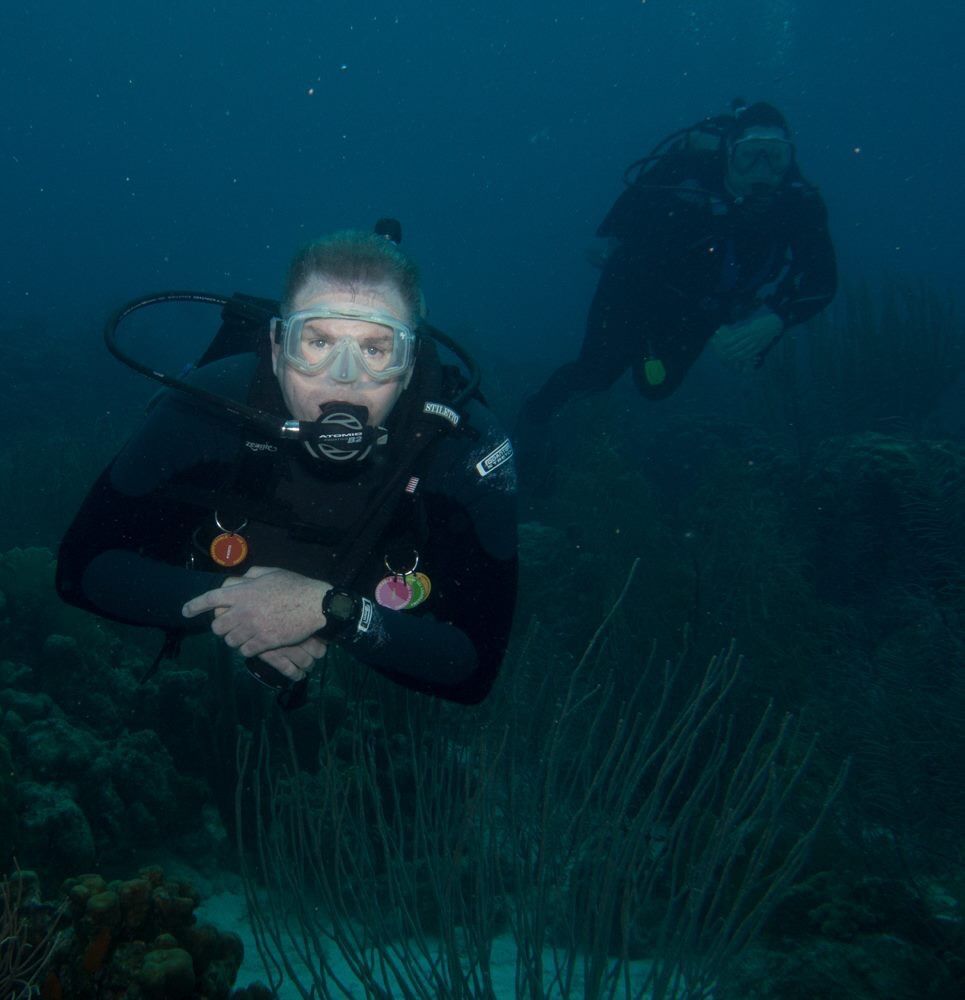
Michael Nole is a Senior Reservoir Simulation Engineer at ResFrac.

Prior to joining ResFrac, Michael was a staff scientist at Pacific Northwest National Laboratory where he developed reservoir simulation software to study coupled multiphase flow and reactive transport processes in the subsurface. Here he worked on developing capabilities to model carbon storage and mineralization, critical mineral recovery, and geothermal energy.


Prior to this, he was a staff scientist at Sandia National Laboratories developing simulation software to model fluid flow and reactive transport processes associated with deep geologic disposal of radioactive waste, led a formal QA of software for use as a safety assessment code for an operating geologic repository, and developed software capabilities for modeling methane accumulation in marine and Arctic permafrost environments.

Michael obtained a B.S. in Civil & Environmental Engineering from the University of California at Berkeley, and an M.S. and Ph.D in Petroleum & Geosystems Engineering from the University of Texas at Austin.

In his free time, Michael loves to bike, swim, hike, ski, and tolerates running so that he can train to race triathlons.

Michael's posts

Banneker logo with a triangular emblem (dark and light blue) left of bold navy text on a pale blue background.

ResFrac, a Leader in Advancing the Future of Subsurface Simulation, Receives Platform Investment from Banneker Partners

Banneker Partners (“Banneker”) today announced a platform investment in ResFrac Corporation (“ResFrac”), the developer of the industry’s only fully integrated reservoir simulation and hydraulic fracturing platform. ResFrac uniquely couples reservoir simulation and hydraulic fracture modeling, enabling engineers to model a well’s entire life cycle, from the moment rock is fractured through years of production, in a single, continuous simulation. This precision allows energy operators to test thousands of design scenarios in a virtual environment, optimizing completion design and maximizing resource recovery while minimizing capital risk.

Read more

Production impact of horizontal fractures

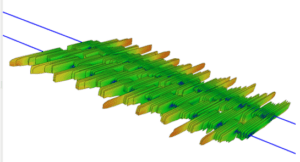
At the 2025 SPE International Hydraulic Fracturing Technology Conference, we (Dontsov, Zoback, McClure, and Fowler) presented “Hydraulic Fracture Propagation Along Bedding Planes Might Be More Prevalent Than We Think” (SPE-226637). The paper reviewed case studies with evidence of horizontal or bedding plane fractures from microseismic, fiber optics, core observations, and casing deformation.

Read more

Meet the ResFrac team

Learn why both independents and supermajors trust ResFrac

Search