
ResApps
Tools to facilitate key engineering and geoscience workflows

Cutting-edge capabilities in practical, easy-to-use apps
StageOpt
Predict the effect of perforation design on fluid and proppant transport from the wellbore.
IntTest
Apply the CPG and DQI procedures to assess fracture conductivity and degree of production impact.
FracTest
Accurately estimate stress, permeability, and pore pressure from DFITs.
Technical capabilities
- Cutting-edge best practices
- Answer critical engineering questions
- Transparent, clear documentation
User-interface features
- Web-based platform
- Streamlined, easy-to-use
- Save, import, and export your work
More about the apps
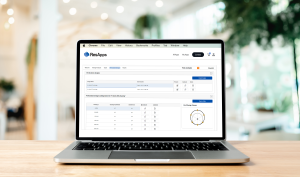
StageOpt
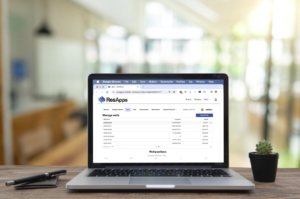
IntTest
Analyze interference tests to estimate fracture conductivity and the degree of production interference.
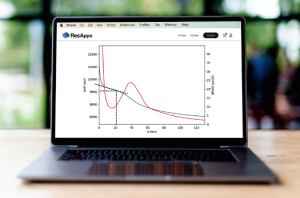
FracTest
Use modern best-practices to interpret Diagnostic Fracture Injection Tests to estimate stress, permeability, and pore pressure.
Get up to speed quickly with help content built directly into the app
FAQ’s
Applications
ResApps are a suite of tools designed to facilitate key engineering and geoscience workflows.
Yes, you can! ResApps are licensed separately from the ResFrac simulator.
No, the apps are entirely web-based.
Submitted data are stored in an encrypted database hosted on Microsoft Azure. Data are keyed by user, so users are only able to access their own data. All data transmissions are handled using industry-standard encrypted protocols.
Licenses are annual subscriptions for individual-users. For more information on licensing, please reach out to the team at [email protected] and we will get you started.
Please contact us at [email protected]